
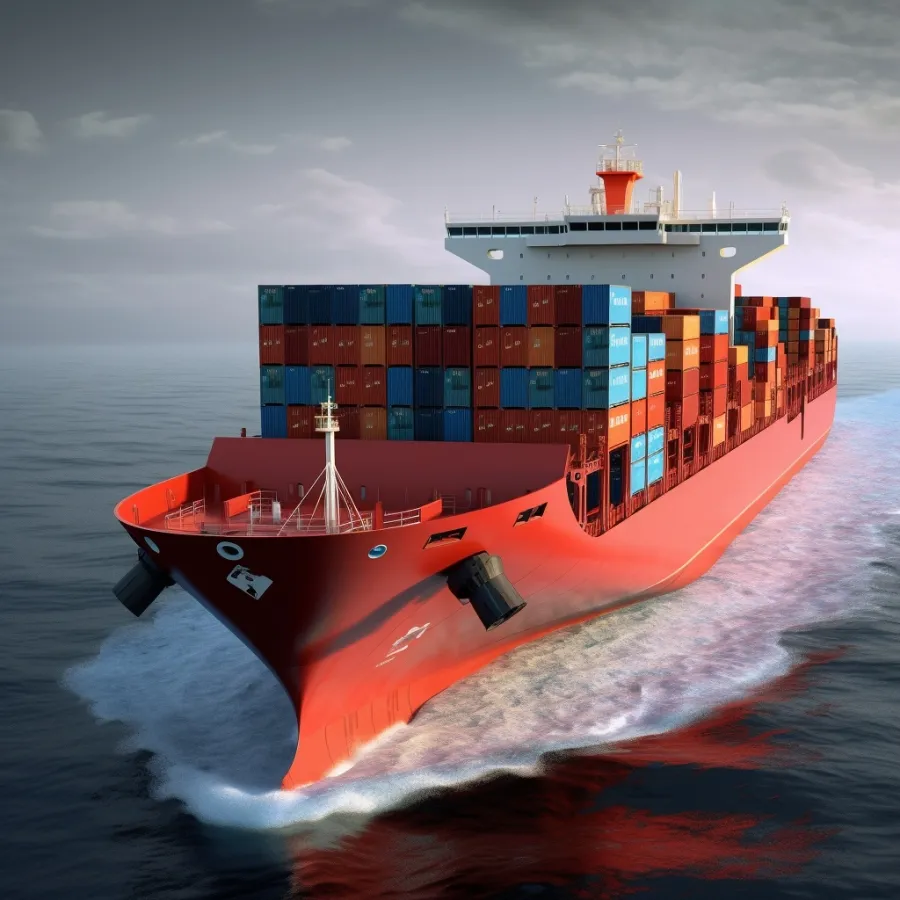
What is sea freight?
Sea freight, also called ocean freight, is the transport of goods by cargo vessel: containerships, bulk carriers, and breakbulk vessels that link ports across the globe. It is the world’s most widely used mode of international trade, handling the majority of global cargo by volume, and it remains the most cost-effective solution for large, heavy or non-urgent shipments. GHO Express has arranged ocean cargo through the Port of Beirut since 1971, providing exporters and importers in Lebanon with reliable, well-priced access to worldwide shipping lanes.
Our sea freight team operates from our Beirut headquarters and works closely with carriers, port agents and our global network of partners to ensure your container or breakbulk shipment moves on schedule, from the moment it leaves your warehouse to the moment it arrives at the consignee’s door.
Sea freight services we provide
- FCL (Full Container Load), exclusive use of a 20-foot (TEU) or 40-foot container, including 40-foot high-cube (HC) and specialised units such as open-tops and flat-racks. Preferred for large volumes where you want cost certainty and cargo segregation.
- LCL (Less than Container Load), consolidation, we combine your cargo with other consignments in a shared container, so you pay only for the space you use. Ideal for volumes under 15 CBM or for regular smaller shipments.
- Breakbulk and out-of-gauge cargo, heavy machinery, structural steel, oversized project equipment and other cargo that cannot be stuffed into a standard container. We plan the lift, lashing and stowage. For large industrial movements, see also project cargo.
- Reefer (refrigerated) containers, temperature-controlled ocean shipping for perishable food, pharmaceuticals, flowers and other cold-chain cargo, integrating with our perishable logistics service.
- Export sea freight, cargo collected in Lebanon, export customs cleared, booked onto the next suitable vessel, bill of lading issued.
- Import sea freight, inbound FCL or LCL to Beirut, off-loaded, customs cleared and delivered within Lebanon. See our customs clearance service.
How a sea freight shipment works
- Quotation and booking. You provide the origin, destination port, cargo type, weight and dimensions (CBM). We identify the best carrier and service, quote the ocean freight and all port charges, and confirm the booking.
- Inland collection and stuffing. We collect your cargo from any point in Lebanon. For FCL, we arrange a container drop at your premises for self-stuffing, or handle stuffing at a depot. For LCL, cargo is consolidated at our warehouse.
- Export customs clearance. Our licensed brokers handle Lebanese export formalities, customs entry, duty and tax assessment, and release. See customs clearance for the full process.
- Port of Beirut handling. We deliver the cargo or container to the port, manage terminal charges, and ensure the shipment is cut off in time for the vessel.
- Ocean leg. The vessel sails on the scheduled service. We provide you with the bill of lading and track the vessel’s progress.
- Arrival and import clearance. At the destination port, our agent handles port formalities, import customs clearance and onward delivery to the consignee’s address.
Port of Beirut, what importers and exporters should know
The Port of Beirut is Lebanon’s principal commercial gateway for ocean freight. It handles the bulk of the country’s container traffic and connects to most major global shipping lines through Mediterranean hubs such as Port Said (Egypt), Marsaxlokk (Malta) and Piraeus (Greece), as well as direct services to Gulf and European ports.
Key operational points:
- Container cutoff, exporters should have cargo at the port terminal typically 48-72 hours before the vessel’s estimated departure, depending on the carrier.
- Port charges, THC (Terminal Handling Charges) apply at Beirut and at the destination port; we include these transparently in our quotations.
- Customs in Lebanon, the Lebanese Customs Administration requires an electronic customs declaration (Asycuda) for both imports and exports. Our brokers file these routinely.
- Port congestion, vessel schedules through Beirut can vary; we monitor conditions and advise on alternative routings via Limassol or other feeder hubs when needed.
Incoterms for sea freight
Incoterms® define where the seller’s responsibility ends and the buyer’s begins. For containerised ocean cargo, the four terms designed specifically for sea transport are FAS, FOB, CFR and CIF, but for containerised (FCL/LCL) shipments, the ICC recommends the all-mode terms FCA, CPT and CIP, which correctly place risk transfer at the container yard rather than over the ship’s rail.
| Incoterm | Seller covers | Buyer covers |
|---|---|---|
| EXW | Nothing | Everything |
| FCA | To named place (e.g. our CY) | Ocean + destination |
| FOB | To vessel’s rail at load port | Ocean + destination |
| CFR | Ocean freight to destination port | Import duties + delivery |
| CIF | Ocean + marine insurance | Import duties + delivery |
| DAP | Everything to named place | Import duties only |
| DDP | Everything door-to-door incl. duty | Nothing |
We help you choose the right Incoterm for your commercial contract and explain what each party must insure and pay for at every leg.
Sea vs. air freight, choosing the right mode
Sea freight is the right choice when cost matters more than speed, and when cargo volume or weight makes air freight prohibitively expensive. As a practical guide: if your shipment exceeds 200 kg or 1 CBM and can wait 2-5 weeks for delivery, sea freight will almost always cost less than air. For urgent, small or high-value cargo, compare with our air freight service. Many clients use both modes, air for time-critical stock replenishment, sea for bulk orders.
Documentation checklist for sea freight
Prepare the following before your vessel cutoff:
- Commercial invoice (stating value, currency and Incoterm)
- Packing list (number of packages, marks, weights and dimensions)
- Bill of lading (issued by the carrier; we coordinate)
- Certificate of origin (required by most importing countries)
- Export licence or permits (commodity-dependent)
- Phytosanitary or fumigation certificate (for wooden packing materials)
- Dangerous-goods declaration, IMO DGD (for hazardous cargo)
- Reefer temperature instructions (for refrigerated containers)
We review and prepare the complete set for your shipment and coordinate with the shipping line to avoid any pre-shipment documentation delays.
Coverage
GHO Express has physical offices in Lebanon, our Beirut headquarters (St. Charles City Center, Mina El Hosn) and our airport cargo office (Rafic Hariri International Airport, LAT Building, Cargo Village). From these bases, we manage sea freight to and from ports worldwide through our global agent and partner network. Whether you are exporting Lebanese goods or importing to Beirut, we handle the ocean leg, the Lebanese customs formalities, and the coordination with destination agents end to end.
Why GHO Express for sea freight
- Since 1971, over five decades of ocean freight experience through the Port of Beirut.
- FIDI member, internationally recognised quality standards across all our logistics operations.
- Full-service capability, FCL, LCL, breakbulk, reefer and project cargo under one roof.
- Customs expertise, our licensed brokers handle Lebanese customs clearance in-house, avoiding handoff delays.
- Global network, partner agents at destination ports for true door-to-door delivery.
Ready to move your cargo by sea? Request a quote with your origin, destination, commodity, weight and CBM, and our team will respond with a competitive ocean freight rate and a clear transit time.
Frequently asked questions
What is the difference between FCL and LCL sea freight?
FCL (Full Container Load) means you book an entire container, a 20-foot (TEU) or 40-foot unit, exclusively for your cargo. LCL (Less than Container Load) means your cargo shares a container with other shippers' goods; you pay only for the cubic metres and kilograms you use. FCL is more efficient once you fill roughly 15-18 CBM or more, while LCL suits smaller, one-off consignments where cost per unit matters more than transit speed.
How long does sea freight from Beirut take?
Transit times from the Port of Beirut depend on destination. Western Mediterranean and Egyptian ports: 3-6 days. Gulf ports (Jebel Ali, Dammam): 7-12 days. Northern European ports (Rotterdam, Hamburg): 18-25 days. North American East Coast: 25-35 days. Total door-to-door time adds inland pickup, Port of Beirut handling, and import customs at destination, typically 5-14 working days on top of the ocean leg.
What documents are required for sea freight from Lebanon?
A standard export ocean shipment from Lebanon requires: a commercial invoice, a packing list, a bill of lading (issued by the carrier; we coordinate this), a certificate of origin, and, for controlled or regulated commodities, an export licence or other permits. Some destinations additionally require a fumigation certificate for wooden packaging. We prepare and check the complete document set before vessel departure so nothing holds at customs.
Can GHO Express handle refrigerated (reefer) ocean cargo?
Yes. We arrange reefer container bookings for temperature-sensitive cargo, chilled, frozen or controlled-atmosphere, on regular liner services through Beirut. This dovetails with our perishable logistics capability for fresh produce, pharmaceuticals and dairy. Our team sets and verifies the temperature parameters, confirms power supply at the terminal, and monitors the container throughout transit.
What Incoterms apply to sea freight?
The Incoterms designed specifically for sea and inland waterway transport are FAS, FOB, CFR and CIF. For containerised cargo, industry practice increasingly favours FCA, CPT and CIP (which apply to any mode) because they place responsibility correctly once the container is handed to the carrier at the container yard, before loading on the vessel. We advise which Incoterm best reflects your commercial agreement and reduces risk for both buyer and seller.
Does GHO Express handle port-to-port and door-to-door sea freight?
Both. We can quote port-to-port if you manage your own inland legs, or a full door-to-door service covering pickup anywhere in Lebanon, export customs clearance, ocean freight, import clearance at destination, and final delivery, all coordinated through our global agent and partner network.