
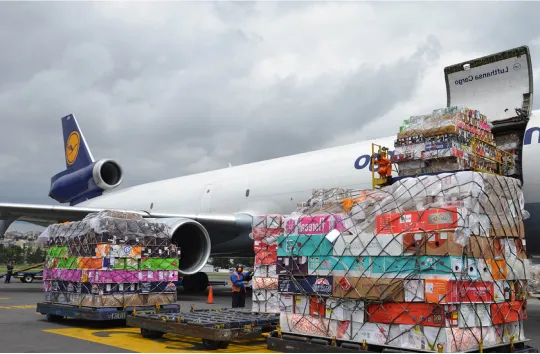
What is perishable logistics?
Perishable logistics, also called cold chain logistics, is the specialised management of goods that must be kept within a defined temperature range throughout their journey. Any break in that chain can render the cargo unsaleable or unsafe. The discipline covers fresh fruit and vegetables, cut flowers, chilled and frozen proteins, dairy products, pharmaceuticals (vaccines, biologics, temperature-labile medicines) and certain industrial chemicals. GHO Express has managed cold chain shipments through Beirut since 1971, applying over five decades of local knowledge to the exacting demands of time-critical, temperature-sensitive cargo.
Our airport cargo office sits inside Rafic Hariri International Airport’s Cargo Village (LAT Building), and our Beirut headquarters coordinates sea reefer movements through the port. That dual presence means we manage both modes, air and sea, from the same experienced team.
Temperature-controlled services we provide
- Reefer air freight, cool-room handling at Beirut airport, priority booking on temperature-controlled flight positions, and coordination with cool-store facilities at destination through our global agent network.
- Reefer container sea freight, FCL and LCL reefer container bookings for bulk perishable volumes, with continuous temperature monitoring and pre-trip inspection of the equipment. See sea freight.
- Pharmaceutical cold chain (GDP), handling compliant with Good Distribution Practice guidelines, including temperature-logging and documentation for health authority review.
- Fresh produce export, coordination of farm-gate or packing-house collection, phytosanitary inspection scheduling, and export clearance for Lebanese produce heading to the Gulf, Europe and beyond.
- Airport cold-room coordination, booking and management of cool-store slots at Rafic Hariri International Airport to eliminate waiting time on the apron.
- Export and import customs clearance, specialist clearance for perishable shipments, prioritised to avoid delays. See customs clearance.
How a perishable shipment works
- Assessment and mode selection. We review your commodity, temperature band, volume, shelf life and target delivery date, then recommend air or sea reefer, or a combination.
- Pre-shipment setup. Cool-room slot and flight position confirmed (air), or pre-trip reefer inspection and terminal power confirmed (sea). Cargo is collected from origin and pre-cooled to the target temperature.
- Export customs clearance. Our brokers handle Lebanese export formalities and perishable-specific certificates (phytosanitary, health, origin), prioritised to keep the cold chain intact.
- Transit with monitoring. The shipment moves with temperature data loggers on board. Any excursion is flagged immediately to our team and the client.
- Arrival, import clearance and delivery. Destination agents prioritise import release for perishables; final delivery is in a refrigerated vehicle to the consignee’s cold store.
Fresh produce and pharmaceuticals, the two key segments
Fresh produce from Lebanon, Lebanon exports citrus, stone fruit, berries and vegetables to the Gulf, Europe and West Africa. A delayed phytosanitary inspection or a missed flight can cost an entire consignment. We pre-schedule inspections with the Lebanese Ministry of Agriculture, hold cool-room slots at the airport, and book the earliest suitable flight positions. For bulk volumes, reefer containers by sea are a cost-effective alternative when shelf life allows.
Pharmaceutical cold chain, Pharma shipments require documented proof of temperature control at every step. We coordinate GDP-aligned handling, use calibrated data loggers, and provide temperature excursion reports on request. Bookings are placed on airlines with certified pharma handling programmes, and destination agents are briefed to prioritise import release.
Air vs. sea reefer, choosing the right mode
Air cool-room is the right choice for pharmaceuticals, short-shelf-life produce and urgent shipments (1-5 days total transit). Reefer container sea freight is the economical option for bulk frozen or chilled volumes where transit time of 7-30+ days is acceptable and shelf life permits. Many clients use both: air for urgent or high-value consignments, sea reefer for planned bulk movements. We give you honest mode advice based on your product, not a push toward one option.
Documentation checklist for perishable exports
- Commercial invoice
- Packing list
- Air waybill or bill of lading (issued by GHO Express)
- Phytosanitary certificate (plant products, issued by Ministry of Agriculture)
- Health/veterinary certificate (animal products, issued by Ministry of Economy or Agriculture)
- Certificate of origin
- Export licence or permits (commodity- and destination-dependent)
- GDP temperature log and packaging validation report (pharmaceuticals)
- Dangerous-goods declaration if applicable (dry ice, certain chemicals)
We coordinate with the relevant Lebanese authorities to obtain these certificates in parallel with cargo preparation, so document delays do not sit on the critical path.
Coverage
GHO Express has physical offices in Lebanon, Beirut headquarters (St. Charles City Center, Mina El Hosn) and our airport cargo office at Rafic Hariri International Airport. We ship perishable cargo to and from destinations worldwide through our global partner and agent network, with vetted cold chain agents at each destination. Key Lebanese perishable export lanes: Lebanon-UAE, Lebanon-Saudi Arabia, Lebanon-Kuwait, and Lebanon-EU.
Why GHO Express for cold chain logistics
- Since 1971, five decades of perishable and cold chain experience through Beirut, understanding seasonal production cycles and the pace of Lebanese customs.
- On-site at the airport, our Cargo Village office means we manage cool-room slots and flight bookings directly, not through intermediaries.
- Dual-mode capability, air and sea reefer from the same team, so you get honest mode advice rather than a push toward one option.
- Document management, we coordinate phytosanitary and health certificates so nothing misses a flight.
- FIDI member, quality standards and accountability across our operations.
- Global agent network, destination cold chain agents in the markets that matter for Lebanese exporters and importers.
Cold chain failures are expensive and sometimes irreversible. Request a cold chain quote with your commodity, temperature requirements, volume and target delivery date, and our team will respond with a routing, timeline and all-in cost within one business day.
Related services
Frequently asked questions
What types of perishable cargo does GHO Express handle?
We handle the full range of temperature-sensitive cargo: fresh fruit and vegetables, cut flowers, chilled and frozen meat and seafood, dairy products, pharmaceuticals (including vaccines and biologics), and chemical inputs that require temperature control. We plan the right mode, reefer container by sea or cool-room air cargo, based on the product's temperature requirements and the transit time available.
What temperature ranges can you maintain for cold chain shipments?
We coordinate handling across the standard cold chain bands: chilled (+2 °C to +8 °C) for pharmaceuticals and fresh produce; controlled ambient (+15 °C to +25 °C) for certain pharma products; and frozen (-18 °C and below) for meat, fish and frozen foods. The exact regime depends on the commodity and the requirements set by the shipper or the destination market.
How does GHO Express handle perishables at Beirut airport?
Our airport cargo office is located in the LAT Building, Cargo Village at Rafic Hariri International Airport. We coordinate with the airport's cold-storage facilities to ensure shipments move directly into temperature-controlled storage upon arrival or departure, minimising tarmac exposure. Bookings are timed to the soonest suitable flight to limit overall transit time.
Can you ship perishables by sea as well as by air?
Yes. Reefer (refrigerated) containers on LCL or FCL sea freight are cost-effective for larger perishable volumes, for example bulk produce or frozen product, where transit time allows. We advise on whether air or sea is the right mode based on shelf life, volume and cost. See our sea freight service for reefer container bookings on this route.
What documents are needed to export perishables from Lebanon?
Beyond the standard commercial invoice, packing list and bill of lading or air waybill, most perishable exports require a phytosanitary certificate (for plant products), a health certificate (for animal products), a certificate of origin, and any import-country permits. For pharmaceuticals, GDP compliance documentation and a temperature-monitoring log are typically required. We confirm the exact checklist for your product and destination before booking.
How do I get a quote for cold chain shipping from Beirut?
Send us your commodity, required temperature range, origin and delivery address, weight and volume, and your target delivery date. We will recommend the best mode, air or sea reefer, with a routing, estimated transit time, and all-in cost. Contact us at info@ghoex.com or through our online enquiry form.